Asia Is Not Opening Crypto to Everyone. It Is Handing It to the Banks.
The headlines from Asia right now read like a crypto bull case coming to life. Japan reclassified over a hundred digital assets under securities law. Hong Kong issued its first stablecoin licences.
Last verified Also on Medium
On this page
The headlines from Asia right now read like a crypto bull case coming to life. Japan reclassified over a hundred digital assets under securities law. Hong Kong issued its first stablecoin licences. Samsung and Hana Bank together moved more than a billion dollars into Korea’s largest crypto exchange. If you read only the headlines, you would think the region just threw the doors open.
The doors did open. Just not for you.
What is actually happening across Japan, Hong Kong, and South Korea follows a single consistent pattern. Governments are creating regulated entry points for institutional capital while the compliance costs, capital requirements, and structural barriers make those same entry points functionally inaccessible to anyone outside the existing financial establishment. The timing makes this pattern more significant, not less. Bitcoin is sitting roughly 43% below its October 2025 peak. Crypto venture funding is declining as capital rotates into AI. The establishment is laying infrastructure during a downturn, at discounted prices, before retail returns.
That is not a coincidence. It is a strategy. Understanding it matters if you hold crypto or are thinking about doing so.
Japan: Rebuilding Crypto as Regulated Plumbing
On April 10, 2026, Japan’s cabinet approved an amendment to the Financial Instruments and Exchange Act, the legislation that governs stocks, bonds, and traditional securities. For the first time in Japan’s regulatory history, crypto assets are being classified as financial instruments rather than payment tools. The practical consequences of that reclassification are substantial.
Insider trading rules now apply to crypto markets in Japan. Token issuers face mandatory annual disclosures similar to listed companies. The penalties for violations got significantly sharper, with maximum prison terms increasing from three to ten years and fines rising from three million yen to ten million yen. The full legislative timeline shows the lower house passed the bill on June 11, with the upper house deliberation still pending. Final legal effect requires upper house passage, government promulgation, and secondary rulemaking by the FSA.
The tax reform that accompanies this is the change most likely to affect ordinary investors, if and when it passes. Currently, Japanese crypto gains are taxed as miscellaneous income at rates that can reach 55%. The proposed flat rate of 20.3% with a three-year loss carry-forward would put crypto on exactly the same tax footing as listed shares. According to analysis by Finance Magnates, the tax change is targeted for 2028 and sits in a separate bill from the FIEA amendment itself.
The reason this reclassification matters beyond tax policy is structural. You cannot wrap an asset in a regulated exchange-traded fund until it legally qualifies as a financial instrument. Japan just made crypto qualify. SBI Holdings filed for a spot Bitcoin and XRP ETF in August 2025 and is targeting five trillion yen, roughly 32 billion dollars, in assets under management within three years of launch. Japan now has more than 14 million open crypto accounts according to FSA data cited at the time of the bill announcement. A Japanese pension fund will eventually be able to buy an SBI XRP ETF through the same brokerage account it uses to buy domestic equities. That is the stated goal.
One important caveat is worth stating clearly. Cabinet approval on April 10 was not the same as enacted law. As Coinpaprika’s analysis notes, final legal effect requires upper house passage, government promulgation, and FSA secondary rulemaking. The direction is clear. The timeline is measured in years, not months.
Hong Kong: A Velvet Rope with a Beijing Lock
Hong Kong’s Stablecoins Ordinance took full effect in August 2025. When the licensing window opened, 36 companies applied. On April 10, 2026, the Hong Kong Monetary Authority issued exactly two licences. That is a 5.6% approval rate, confirmed by the HKMA, Reuters, Bloomberg, and Elliptic.
The two recipients were not surprising. Licence FRS01 went to Anchorpoint Financial, a joint venture led by Standard Chartered alongside HKT, Hong Kong’s dominant telecommunications company, and Animoca Brands. Licence FRS02 went to HSBC. Both are among only three note-issuing banks in Hong Kong. Two of the most establishment-adjacent names imaginable won the first two slots in a system supposedly designed to bring innovation to digital currency.
The HKMA has been explicit that additional licences will be very limited. A KuCoin analysis of the ordinance notes that officials have stated a preference for a test-first, expand-later approach, meaning watching how the incumbent banks perform before considering whether to let anyone else in. The framework requires applicants to operate at bank-grade standards before receiving a licence, which functions as a structural barrier for any firm without existing banking infrastructure.
The political dimension of this became visible through what got rejected. JD.com and ANT Group both attempted to develop yuan-backed stablecoins. In October 2025, both companies suspended those plans entirely following directives from Beijing. The HKMA issued its first enforcement warning under the new rules against a firm marketing an offshore yuan stablecoin without a licence. Hong Kong will licence a Hong Kong dollar stablecoin operated by HSBC. A yuan stablecoin that competes with the digital yuan project being developed by the People’s Bank of China is a different matter entirely.
Hong Kong is not opening a stablecoin market. It is opening a specifically designed channel that serves Beijing’s interests while filtering out anything that might threaten them.
South Korea: Buying the Casino While the Gamblers Leave
The Korean situation is the sharpest illustration of what institutional crypto accumulation actually looks like in practice, because it is happening in direct contrast to what ordinary Korean investors are doing.
In mid-May 2026, Hana Bank announced it would acquire a 6.55% stake in Dunamu, the operator of South Korea’s largest crypto exchange Upbit, for approximately one trillion won, roughly 670 million dollars. That made Hana the first Korean financial holding company to take direct equity in a crypto exchange and the company’s fourth largest shareholder. Two weeks later, three Samsung affiliates agreed to acquire a combined 4% stake in Dunamu for a further 612.8 billion won, approximately 408 million dollars. Samsung Securities, Samsung SDS, and Samsung Card together bought 1.39 million Dunamu shares from Kakao affiliates.
These institutions are not buying crypto assets. They are buying the infrastructure that crypto assets trade on. As BeInCrypto’s analysis of the Samsung deal notes, Hanwha Investment Securities also lifted its Dunamu stake to 9.84% in the same month, spending 597.8 billion won. In total, nearly 14% of Dunamu transferred to Korean financial giants in a single month. Owning exchange equity means collecting fees from every transaction that passes through the platform, regardless of which direction prices move. The banks are buying the toll booths.
The counterweight to this institutional accumulation is the behaviour of Korean retail investors, which tells a completely different story. According tocrypto.newsciting Digital Asset data, the won-based crypto market’s trading volume fell 71% between August 2025 and May 2026. In December 2024, Korean crypto trading volume reached 323% of KOSPI stock market turnover. By mid-2026, that figure had collapsed to roughly one-tenth of stock market levels.
The capital did not disappear. It rotated. South Korean crypto holdings fell from approximately 83.3 billion dollars at the end of January 2025 to 41.4 billion dollars by February 2026, a decline of roughly 50% in just over a year. The KOSPI index more than doubled in value between January 2025 and February 2026 as investors poured money into AI infrastructure, chip manufacturers, and semiconductor supply chain companies. Samsung Electronics and SK Hynix posted record profits on AI-driven semiconductor demand.
The resulting picture is genuinely striking. Institutions are buying the crypto exchanges at the exact moment retail investors are selling crypto and moving into technology stocks. The banks are acquiring the casino while the gamblers cash out and cross the street.
The Settlement War Underneath All of It
There is a layer to this story that the individual country narratives do not fully capture on their own. Japan, Hong Kong, and Korea are not just separately regulating crypto markets. They are competing to control how money moves across Asia, and to reduce their dependence on dollar-denominated infrastructure while doing it.
In June 2026, Japan’s ruling LDP blockchain panel formally urged the government to promote yen-backed stablecoins for settlement across Asia. Japan’s three mega-banks, MUFG, SMBC, and Mizuho, are actively studying a joint stablecoin issuance. As the Fintech Observer reports, roughly 40% to 50% of Japan’s trade with Asia is already settled in yen, providing an existing foundation for a yen-denominated digital settlement layer.
South Korea is running a parallel playbook. Eight Korean banks including KB Kookmin, Shinhan, and Woori are building a shared won-backed stablecoin consortium. The CoinGecko Korea market guide notes the Bank of Korea has stipulated that only bank-majority consortiums can issue the token, determining from the outset who will own the infrastructure if the project succeeds.
Hong Kong’s rejection of yuan stablecoins fits into this same competition. Every one of these moves is a nation trying to plant its flag in the settlement layer before someone else does. The specific currency varies. The underlying logic is identical.
The honest assessment of where this stands is sobering. Non-dollar stablecoins currently represent under 0.5% of total stablecoin supply according to DeFiLlama’s live stablecoin data. The US dollar accounts for roughly 93% of all stablecoin volume. The nations racing to build alternative settlement infrastructure are competing for a 0.5% share of a market the dollar already dominates comprehensively.
The reason they are fighting so hard for such a small piece is the size of the prize if they succeed. Chainalysis’s 2025 geography report found Asia handles around 60% of global stablecoin payment volume, representing roughly 245 billion dollars per year in real-economy business-to-business settlement. Whoever owns that plumbing collects a small fee on an enormous flow of transactions. That is the actual prize, and it is why Kraken’s parent company Payward agreed to acquire Reap, a Hong Kong firm built specifically for stablecoin payments and cross-border settlements across Asia-Pacific, for up to 600 million dollars in May 2026.
The Headwinds the Bull Case Is Not Talking About
The institutional accumulation story has a counternarrative that deserves equal attention, because the regulatory environment being built is not uniformly favourable to crypto growth.
South Korea’s 22% crypto capital gains tax takes effect in January 2027. A public petition to repeal it gathered 50,000 signatures in eight days but did not change the outcome. The finance ministry confirmed the tax will proceed regardless. For Korean retail investors who have already rotated much of their capital into equities, an incoming tax on crypto gains is an additional reason not to return.
The compliance burden being contemplated for Korean exchanges compounds this. An industry group has warned that a proposed reporting requirement would increase exchange compliance reports from approximately 63,000 per year to over 5.4 million, an 85-fold increase. As the Tiger Research 2026 Korea guide documents, daily average trading volume declined to approximately 3.7 billion dollars, down 15% from the prior half-year, while exchange operating profit fell 38% over the same period.
Crypto venture funding has also declined sharply as the AI infrastructure buildout absorbs the majority of available venture capital globally. The institutional interest in crypto that is visible at the exchange and infrastructure level is not yet translating into the kind of startup ecosystem funding that generates new projects and user growth. The banks are buying the existing plumbing. The pipe for new plumbing is running dry.
What You Are Actually Looking At
Step back from the individual country stories and the pattern becomes clear. The establishment watched an entire generation build crypto infrastructure in the open, during the bull runs, in public view. Now, during the quiet part of the cycle, with prices down significantly from recent highs and retail interest rotating elsewhere, the banks and their regulators are acquiring the finished infrastructure at discounted valuations.
Japan is rebuilding crypto as a regulated asset class that pension funds and insurance companies can access through familiar channels. Hong Kong is operating as a managed gateway for Chinese capital that Beijing can supervise without officially endorsing. Korea’s commercial banks are becoming the largest shareholders in the exchanges that retail investors are walking away from. Beneath all of it, each country is racing to plant its currency’s flag in the regional settlement layer before a competitor does.
The retail investor built the crypto market. The institutional investor is buying the market. Those are not the same activity, and they do not lead to the same outcome for each group.
Whether this is bullish or bearish for crypto prices depends on your time frame and your position in the structure. The infrastructure being built is real. The regulatory frameworks taking shape will eventually lower the barriers for institutional capital that is currently waiting on the sidelines. That is a genuine case for long-term price appreciation.
The countercase is that the crypto being built in Asia over the next several years will be institutionally owned, bank-supervised, and government-managed in ways that the original design of these systems was explicitly intended to avoid. The transparency, permissionlessness, and resistance to institutional capture that made crypto compelling as an alternative financial system may not survive the integration process intact.
Five things are worth watching as this plays out. Whether Japan’s upper house passes the FIEA amendment, since the tax reform and ETF pathway both depend on it. Whether Hong Kong’s stablecoin licence count stays at two or expands to include non-bank issuers. Whether any non-dollar stablecoin meaningfully exceeds the 0.5% market share ceiling, since that is the real scoreboard for the de-dollarisation war. Whether Korean retail returns to crypto exchanges after the 22% tax lands in January 2027. Finally, whether new Dunamu partnership announcements from Hana and Samsung produce won stablecoin products that compete with offshore alternatives.
The gates are open. The question is who they were built for.
Sources
- CCN: Japan Classifies Crypto as Financial Instrument, April 10, 2026 — Cabinet approval of FIEA amendment reclassifying crypto assets as financial instruments.ccn.com. Accessed 16 June 2026.
- SpottedCrypto: Japan Crypto FIEA Bill 2026 Full Analysis — Detailed breakdown of what the bill does and does not do, including the upper house requirement.spotedcrypto.com. Accessed 16 June 2026.
- Coinpaprika: Japan Reclassifies Crypto as Financial Instrument — Notes that Japan’s House of Representatives passed the bill June 11, advancing to upper house.coinpaprika.com. Accessed 16 June 2026.
- Finance Magnates: Japan Plans 20% Crypto Tax and FIEA Oversight — Tax reform details including the separate 2028 timeline.financemagnates.com. Accessed 16 June 2026.
- CryptoTimes: Japan Reclassifies Crypto Under FIEA, April 2026 — SBI ETF filing context and 14 million open crypto accounts figure.cryptotimes.io. Accessed 16 June 2026.
- Stablecoin Insider: HKMA Grants First Stablecoin Issuer Licences — HSBC as FRS02 and Anchorpoint as FRS01, licence details and launch timelines.stablecoininsider.org. Accessed 16 June 2026.
- Zagdim: Hong Kong Issues First Stablecoin Licences to HSBC and Standard Chartered — 5.6% approval rate confirmed by HKMA, Reuters, Bloomberg, and Elliptic.zagdim.com. Accessed 16 June 2026.
- KuCoin: HKMA Stablecoin Ordinance Explained — HKMA’s test-first, expand-later approach and bank-grade standards requirement.kucoin.com. Accessed 16 June 2026.
- CoinDesk: Hana Bank to Acquire $670 Million Stake in Upbit Operator Dunamu — 6.55% stake for 1 trillion won, announced May 15, 2026.coindesk.com. Accessed 16 June 2026.
- CoinDesk: Samsung Is Buying a $408 Million Stake in South Korea’s Biggest Crypto Exchange — Samsung Securities, SDS, and Card acquiring combined 4% stake, May 28, 2026.coindesk.com. Accessed 16 June 2026.
- BeInCrypto: Samsung Dunamu Upbit Stake — Full breakdown of the May Dunamu buying spree including Hanwha’s 9.84% position.beincrypto.com. Accessed 16 June 2026.
- crypto.news : South Korea Crypto Trading Crashes to One-Tenth of Stock Market Volume — 71% volume decline between August 2025 and May 2026. Holdings fell from $83.3B to $41.4B.crypto.news. Accessed 16 June 2026.
- CoinGecko: 2026 Korea Crypto Market Guide by Tiger Research — Daily average volume at $3.7B, down 15%; exchange operating profit down 38%.coingecko.com. Accessed 16 June 2026.
- CoinGecko: South Korea Crypto Market Maturation 2026 –22% capital gains tax confirmation and volume data from Q4 2025 to Q1 2026.coingecko.com. Accessed 16 June 2026.
- Tiger Research: 2026 Korea Crypto Industry Guide — Full institutional vs retail divergence analysis for the Korean market.reports.tiger-research.com. Accessed 16 June 2026.
- Fintech Observer: Japan’s Great Crypto Migration to FIEA — MUFG, SMBC, Mizuho joint stablecoin study and yen settlement share in Asia.fintechobserver.com. Accessed 16 June 2026.
- DeFiLlama: Stablecoin Market Data — Live data: non-dollar stablecoins under 0.5%, USD at approximately 93% of supply.defillama.com. Accessed 16 June 2026.
- Chainalysis: Crypto Geography Report 2025 — Asia handling approximately 60% of global stablecoin payment volume, around $245B annually.chainalysis.com. Accessed 16 June 2026.
- CoinDesk: Kraken to Buy Stablecoin Payments Firm Reap in $600 Million Deal — Kraken parent Payward acquiring Hong Kong-based Reap Technologies, May 7, 2026.coindesk.com. Accessed 16 June 2026.
Related stories

Crypto & markets
Richard Heart Beat the SEC on a Technicality, Then His Own Tax Office Caught Up With Him in…
On 14 October 2026, Turkish police arrested the founder of Hex and PulseChain on an Interpol red notice issued for Finland, which suspects him of gross tax evasion. He had walked away from a $1 billion SEC case 18 months earlier, not because a court cleared him, but because the judge found no US jurisdiction. I went through the whole arc, the sacrifice mechanism, the allegations, the dismissal that was not an acquittal, and a blockchain whose biggest customer was its own founder.
Security
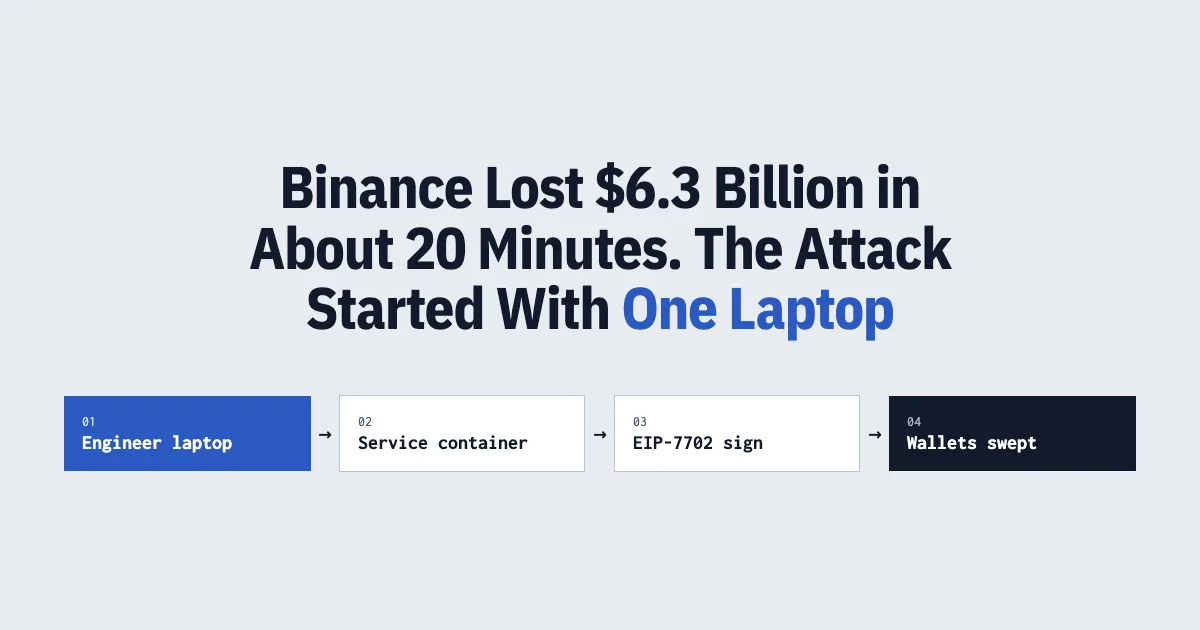
Binance Lost $6.3 Billion in About 20 Minutes. The Attack Started With One Laptop
On 29 October 2026 attackers drained roughly $6.3 billion from Binance hot wallets in about 20 minutes, 4 times the size of the previous record. The way in was a compromised engineer’s laptop, and the clever part was a new Ethereum feature called EIP-7702 that let them turn a hot wallet into an automatic sweeper. I went through how it happened, how much got frozen, and why this did not break crypto the way it would have a few years ago.
Crypto & markets
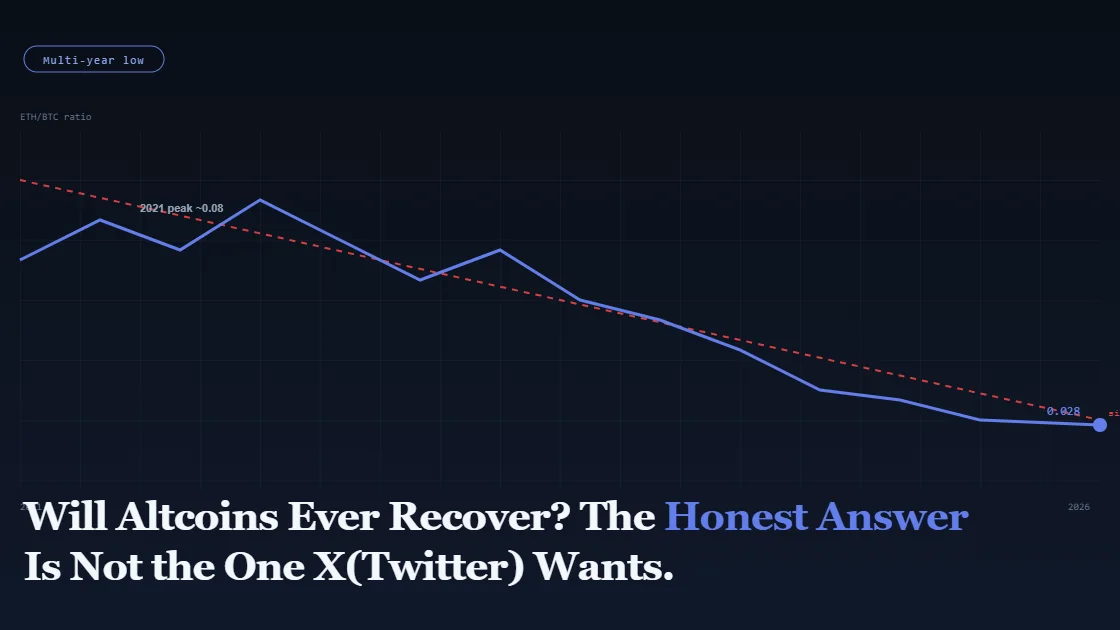
Will Altcoins Ever Recover? The Honest Answer Is Not the One X(Twitter) Wants.
Note: This article is for informational purposes only and does not constitute financial or investment advice.