LinkedIn Is Broken. And You Already Know It.
A honest, uncomfortable look at what the platform has become and what to do instead.
Last verified Also on Medium
On this page
- The Ghost Job Problem Is Worse Than You Think
- It’s Turned Into Instagram. And Not the Good Parts.
- The Fake Profile Problem Is Massive and Underreported
- The ‘Open to Work’ Banner: Well-Intentioned, Complicated in Practice
- The Influencer Economy Has Arrived, and It Brought All Its Distortions
- LinkedIn Is Also Quietly Becoming a Social Status Marker
- To Be Fair: What LinkedIn Is Still Actually Good For
- If Not LinkedIn, Then What? Here’s Where to Actually Find Good Opportunities
- 1. X (Twitter) - Where the Jobs Get Posted Before They’re Posted
- 2. Wellfound (formerly AngelList Talent) Startup Roles That Are Actually Real
- 3. Pallet- Community-Curated Job Boards
- 4. Professional Slack Communities & Discord/TG Servers
- 5. GitHub — For Engineers, the Profile That Actually Matters
- 6. Personal Referrals — Still the Highest-Converting Channel
- 7. Direct Company Applications + Hiring Manager Follow-Up
- The Tactical Playbook: How to Run Your Job Search Without Relying on LinkedIn
- The Uncomfortable Conclusion
Let me paint you a picture. You’ve spent 3 evenings this week rewriting your resume. You’ve tailored your cover letter for each application. You’ve applied to 52 jobs on LinkedIn over the last six weeks. You’ve heard back from 4. Two of those were automated rejections. One was a recruiter asking if you were available for a role that had nothing to do with what you applied for. And the last one? That listing was posted in September. The role was filled in October. It’s January.
Sound familiar? You’re not alone and more importantly, it’s not you.
LinkedIn, the platform that promised to be the world’s most useful professional network, has turned into something else entirely. It’s part job board with phantom listings, part Instagram for people in blazers, part scam vector, and part motivation-poster factory. And because so many of us depend on it for jobs, visibility, professional credibility we keep using it even when it’s clearly not working.
So let’s talk about it properly. What’s broken, why it’s broken, and most importantly what you should actually be doing instead.
The Ghost Job Problem Is Worse Than You Think
Start here, because this one affects the most people and causes the most quiet, grinding harm.
Ghost jobs listings that are already filled, never existed, or are being kept live on purpose have become a defining feature of the modern job board experience and LinkedIn is drowning in them. A 2024 survey by ResumeBuilder.com which surveyed 1,641 hiring managers found that 40% of companies admitted to posting a fake job listing in the previous year. 3 in 10 companies still had fake listings live at the time of the survey. The reasons they gave were remarkable in their casualness: ‘collecting CVs for future openings,’ ‘making employees feel replaceable,’ ‘giving the impression the company is growing.’ 1 in 10 companies admitted they had no intention of filling the role they were actively advertising.
It gets worse. A 2025 Clarify Capital study found that nearly 1 in 3 employers admit to posting jobs with no intention to hire.Meanwhile, a 2024 analysis of Greenhouse’s platform data found that 18–22% of all online job ads are fake or unfilled, with 70% of companies posting at least one ghost job in Q2 2024 alone.
A separate 2024 analysis of almost 270,000 Glassdoor reviews by a City University of New York PhD student estimated that up to 21% of job ads may be ghost jobs. And a 2025 analysis of LinkedIn job posts specifically suggested 27.4% of US ads were ghost jobs over one in four.
What this means in practice? Every time you agonise over a tailored cover letter, research the company, customise your portfolio and press Apply there’s a statistically meaningful chance the role doesn’t exist. You are pouring real emotional labour and real time into a void.
And LinkedIn profits from this. More listings mean more perceived opportunity. More perceived opportunity means more users. More users mean more ad revenue. There is no real business incentive to fix it aggressively. As one recruiter put it to Fortune , posting fake jobs can cause ‘irreparable damage’ to employer brand yet 7 in 10 hiring managers say they believe the practice is morally acceptable.
This isn’t a bug. It’s a business model feature that happens to cost you personally.
The ghost job numbers, at a glance:
→ 40% of companies posted a fake job listing in 2024 (ResumeBuilder, 1,641 hiring managers surveyed)
→ 27.4% of LinkedIn US job ads estimated to be ghost jobs (ResumeUp.AI, 2025)
→ 18–22% of Greenhouse platform listings classified as fake or unfilled (Greenhouse internal data, Q2 2024)
→ 85% of companies posting fake jobs went so far as to interview candidates for non-existent roles
→ 3 states (New Jersey, California, Kentucky) have introduced legislation requiring removal of inactive listings
It’s Turned Into Instagram. And Not the Good Parts.
Remember the old LinkedIn? The mildly boring but genuinely useful place where you updated your job title and occasionally endorsed someone for ‘Microsoft Excel’?
That LinkedIn is gone. What replaced it is something genuinely strange.
LinkedIn’s engagement algorithm rewards emotional, personal content above almost everything else. A 2025 analysis of 1.8 million LinkedIn posts by researcher Richard van der Blom found that organic reach has dropped by nearly 50%, and that visibility is now heavily concentrated among a smaller group of ‘top creators’ people who post frequently and generate emotional engagement.
So professionals many of them smart, capable people who understand incentives have learned to reverse-engineer that. The result is a content genre that is uniquely, almost artistically insufferable.
You’ve seen it. The founder who posts a photo of their Range Rover ‘not to flex, but to show what consistent effort looks like.’ The CEO who shares a story about crying on a flight and turns it into a 900-word post about ‘authentic leadership’ that ends with ‘follow for more real talk.’ The person who ‘almost quit last Tuesday’ but then saw something inspiring at the gym and decided to keep going and would you like to know their 5 steps to resilience? They have a course. Of course they have a course.
This genre has a name, hustle porn. It’s the LinkedIn-specific fusion of performative ambition, manufactured vulnerability, and vague inspiration optimised for reactions over insight. The platform’s algorithm has trained people to perform, and now the performers are everywhere.
To be fair, LinkedIn’s 2026 algorithm updates are attempting to correct this Digital Applied reports that the platform is now actively suppressing ‘engagement bait’ and rewarding content depth over emotional manipulation. But the years of conditioning have left a feed that still feels far more like a motivational poster factory than a professional network.
The Fake Profile Problem Is Massive and Underreported
LinkedIn claims over one billion members. But how many of those are real, active, legitimate professionals?
The honest answer? significantly fewer than a billion. According to Besedo’s analysis of LinkedIn’s transparency data, LinkedIn blocked or removed more than 121 million fake accounts in 2023 alone. In 2024, that number climbed further LinkedIn’s own transparency report confirmed 100 million fake accounts removed in 2024, 80.6 million at registration stage, 19.7 million intercepted proactively, and 265,700 after user reports. LinkedIn’s official Community Report confirms 99.7% are caught proactively but that still leaves hundreds of thousands that aren’t.
These aren’t just spam bots. The sophisticated fakes are genuinely hard to spot. AI-generated profile photos with that eerily smooth skin and slightly blurred background. Fabricated work histories pulling real company names. Profiles with hundreds of connections and endorsed skills that were gamed through fake account networks.
What are these fake profiles used for?
- Recruiting scams that collect CVs and personal data, then disappear
- ‘Pig butchering’ investment fraud, a fake persona spends weeks building a genuine-feeling relationship before introducing a ‘great opportunity’ in crypto or forex
- Competitor intelligence, fake recruiter profiles used to extract information from rival company employees
- Engagement farming, fake accounts that inflate post metrics and signal false popularity
The FBI has formally identified LinkedIn as a significant vector for financial fraud. In an exclusive interview with CNBC, FBI Special Agent Sean Ragan called crypto investment scams on LinkedIn ‘a significant threat’ to both the platform and consumers. The FBI’s Operation Level Up, launched in 2024, was specifically aimed at intercepting victims of ‘pig butchering’ cryptocurrency scams that typically begin on professional platforms like LinkedIn.
LinkedIn is trusted precisely because it’s professional. Your real name. Your employment history. Your credentials. The social proof is built into the design. Which is exactly why it’s such an attractive hunting ground for people who exploit trust.
The ‘Open to Work’ Banner: Well-Intentioned, Complicated in Practice
When LinkedIn introduced the green ‘Open to Work’ banner, the intent was good, give job seekers a visible way to signal availability so recruiters could find them faster.
The reality has been messier.
Multiple recruiters and hiring managers many writing openly on LinkedIn itself, with no apparent awareness of the irony have admitted that they treat the banner as a negative signal. The logic, as toxic as it is: if this person were truly talented and in-demand, someone would have already hired them. The banner signals desperation. Desperation is unattractive.
LinkedIn’s own response was telling, they introduced a ‘private’ mode where the signal is only visible to recruiters, not your full network. A useful feature. But the fact that they needed to build it reveals something ugly about the platform’s culture.
It has become a network where you must perform continuous professional success to maintain visibility. You can’t look uncertain. You can’t look like you’re struggling. You can’t be visibly between things. And that means the people who need LinkedIn most the ones actively looking are systematically disadvantaged for showing that need.
The Influencer Economy Has Arrived, and It Brought All Its Distortions
LinkedIn now has full-blown influencers. Not in a small, niche way, in a millions-of-followers, selling-courses, building-personal-empires way.
There are accounts posting exclusively about ‘the habits of successful people’ and ‘what I learned from my first million.’ They sell coaching programmes, group masterminds, and PDF guides to ‘authentic networking.’ This wouldn’t be so bad if the platform didn’t actively amplify them over the mid-level engineer sharing a genuinely useful technical breakdown.
The reach mechanics are the problem.
Research by Richard van der Blom analysing 1.8 million posts found that ‘Top Creator’ visibility on LinkedIn climbed from 15% in 2022 to 31% in 2025, while visibility for other creators collapsed from 57% to 28%. Posting frequency and emotional resonance correlate with reach more than expertise or usefulness. The people who shout loudest about success are, in many cases, selling the idea of success as their primary product.
Meanwhile, the people who actually need LinkedIn, the ones looking for work, trying to recruit, hoping to make a real professional connection are sifting through an increasingly cluttered feed to find signal in the noise.
LinkedIn Is Also Quietly Becoming a Social Status Marker
Here’s something that doesn’t get discussed enough in Western tech circles, LinkedIn’s role has quietly expanded beyond professional utility in several cultures and contexts.
In India where LinkedIn has over 100 million users and is growing faster than almost anywhere else the platform has developed a social dimension that goes well beyond job searching. It’s not uncommon for families to check a potential match’s LinkedIn profile as part of an informal background assessment. Job title, company name, degree institution, visible career progression, these have become markers of social credibility that extend into personal life.
It’s not just India. According to Rest of World’s reporting on LinkedIn scam patterns globally, the platform’s perceived legitimacy and professional trust signals are precisely what make it so valuable and so exploitable across vastly different cultural contexts.
Your LinkedIn profile has become a public reputation dashboard. Companies vet candidates before interviews. Clients research consultants before signing. Investors scan founders before taking meetings. And for many people globally, the pressure to perform on LinkedIn isn’t just professional anxiety it’s genuinely tied to life outcomes in a broader sense. Which makes the platform’s dysfunction feel less like an annoying product issue and more like a systemic problem.
To Be Fair: What LinkedIn Is Still Actually Good For
I’m not here to tell you to delete your account. LinkedIn is still useful just not in the way most people use it. Here’s where it genuinely delivers:
- Warm introductions. If someone you know can connect you to someone at a company you’re targeting, LinkedIn is still the easiest way to make that happen.
- Passive discovery. A well-optimised profile makes it possible for recruiters doing active searches to find you especially with specific, in-demand skills.
- Company research. Before an interview, before a pitch, before a client meeting understanding structure, finding mutual connections, spotting recent moves.
- Niche professional communities. In some industries, substantive conversations still happen in comments and groups. You have to work to find them, but they exist.
- Credibility signalling. A complete, professional LinkedIn profile is simply expected in most industries. Not having one raises questions.
The key mindset shift is treat LinkedIn as a tool with specific jobs to do, not a platform to inhabit. Go in with a purpose, extract the value, leave. Don’t scroll. Don’t compare. Don’t interpret silence as a verdict on your worth.
If Not LinkedIn, Then What? Here’s Where to Actually Find Good Opportunities
This is the part most articles skip. They’ll tell you LinkedIn is broken and leave you staring at the wall. So let’s get specific.
The honest truth is that the best opportunities the ones that result in real offers, at real companies rarely come from cold applications on a job board. They come from being in the right place, with the right visibility, before the job is even posted. Here’s how to build that.
1. X (Twitter) - Where the Jobs Get Posted Before They’re Posted
X has become one of the most effective job sourcing platforms for tech, design, marketing, startups, and creative roles specifically because the culture rewards transparency and directness in a way LinkedIn doesn’t. Founders tweet about what they’re building. Hiring managers share what they’re looking for. Engineering leads post about open roles on their teams.
How to use X for job searching — step by step:
Step 1: Search for hiring signals in your niche. Try: “hiring [your role]”, “looking for a [role]”, “we’re building [domain] join us”
Step 2: When you find a relevant post, reply to the tweet first don’t apply through a link. A reply to a founder’s hiring tweet gets seen. A cold form submission often doesn’t.
Step 3: Follow and engage with the decision-maker before you need anything. Reply thoughtfully to their posts over a few weeks. By the time you DM, you’re not a stranger.
Step 4: Send a direct, specific DM to the hiring manager. “Hi [name] I’ve been following your work on [X]. I saw you’re looking for a [role]. I’ve done [specific relevant thing]. Would it make sense to have a quick call?”
2. Wellfound (formerly AngelList Talent) Startup Roles That Are Actually Real
Wellfound is built specifically for startup hiring. Listings here are almost entirely real startup founders paying for access have a direct incentive to keep listings current. Ghost jobs are far rarer because there’s accountability.
The platform also shows things LinkedIn hides, approximate salary ranges, equity breakdown, company stage and funding status, actual team size. You can make an informed decision before applying which changes the whole dynamic.
- Filter by funding stage and role to find companies actively building and hiring right now
- Read the founder’s note on each listing it tells you about culture and seriousness
- Apply directly, then find the founder or head of hiring on X or LinkedIn and send a brief, specific follow-up message
3. Pallet- Community-Curated Job Boards
Pallet powers job boards run by specific professional communities, newsletters, Slack groups, creator audiences. Because these boards are curated by people with real reputations in their communities, quality is higher. A bad listing reflects on the community host, so there’s natural accountability.
Find the Pallet board for your niche there are boards for product designers, growth marketers, developer advocates, climate tech roles, and dozens more. Small, targeted, and far less noisy than LinkedIn.
4. Professional Slack Communities & Discord/TG Servers
Some of the best hiring conversations happening right now are in Slack and Discord communities and most people outside those communities have no idea. The #jobs or #hiring channels in active professional communities are where people post roles before they go anywhere public. They post there because they want a warm lead, not a cold applicant. Being a genuine, active participant contributing answers, sharing useful things, building a small reputation puts you in the running for roles that never get listed anywhere else..
5. GitHub — For Engineers, the Profile That Actually Matters
If you’re an engineer, your GitHub profile is more valuable than your LinkedIn profile. Hiring managers and technical leads look at your actual work: what you’ve built, how you’ve structured it, whether you write readable code, whether you contribute to open source.
A strong GitHub profile with active contributions, good READMEs, and a project or two that demonstrates real skill will generate inbound recruiter interest in a way that keyword-optimising your LinkedIn profile simply won’t. Many open source projects also have community channels where maintainers post roles at their companies directly.
6. Personal Referrals — Still the Highest-Converting Channel
The data on this has been consistent for years, and it still holds.
A 2024 Aptitude Research report found that referrals convert to hires at 4× the rate of non-referrals 30% conversion versus 7%. Zippia’s 2026 analysis confirms referrals are 4× more likely to be offered a job than candidates applying through traditional job boards. And 2026 data from StaffingHub found that referred candidates made up just 2% of applicants but accounted for 11% of hires making them 10× more likely to be hired.
What this means practically: the highest-ROI activity in your job search is not applying to more jobs. It’s having more genuine conversations with people in your field.
- Reach out to former colleagues for a referral also to genuinely reconnect and share what you’re working on
- Attend industry events, meetups, and conferences. In-person interactions still create stronger connections faster than digital ones
- Offer value before asking for anything. Share something useful, make an introduction for someone else, give a thoughtful piece of feedback
7. Direct Company Applications + Hiring Manager Follow-Up
This sounds almost too obvious, but it genuinely works and most people skip the crucial second step. If there are 15 companies you’d genuinely love to work at, go to their actual career pages and apply directly. Your application doesn’t go through a job board algorithm. It goes to the hiring team.
Then and this is the bit people miss, find the hiring manager for that role on LinkedIn or X. Not to send a formal application. To send a brief, human message:
‘I just applied for your [role] through your site. I’ve been following what you’re building since [specific thing]. Happy to share more context if useful.’ That 30-second message has a higher conversion rate than 90% of the effort people put into LinkedIn.
The Tactical Playbook: How to Run Your Job Search Without Relying on LinkedIn
Let’s make this concrete. Here’s a structured approach that actually generates results.
Week One: Build Your Foundation
- Identify 20 companies you’d genuinely want to work at. Write them down. These are your targets.
- Set up alerts for each, Google Alerts for the company name, Crunchbase for funding news, their X/Twitter for hiring signals.
- Find 10 people on X or LinkedIn who are hiring managers, founders, or senior people at those companies. Follow them. Read what they write. Comment thoughtfully.
- Join two or three Slack or Discord communities relevant to your role and industry. Introduce yourself. Be helpful before you need anything.
- Optimise your GitHub, portfolio, or writing profile whichever is most relevant to what you do. This is the asset that compounds over time.
Week Two: Start Making Contact
- Look for X posts from your target companies with hiring signals. Reply before you DM.
- Apply directly to three to five companies through their career pages. Then send a brief follow-up to the relevant hiring manager.
- Reach out to three former colleagues not asking for referrals, just genuinely reconnecting and sharing what you’re looking for.
- Post something useful in one of your Slack communities. Answer a question. Share a resource. Be a person, not a job seeker.
Ongoing: What Consistency Actually Looks Like
- Two to three targeted direct applications per week, always followed by a human message to the hiring manager
- 10 minutes daily on X checking for hiring signals in your niche
- One genuine community contribution per week a comment, a resource, a useful thread
- One coffee chat or call per week with someone in your field not a pitch, just a conversation
The principle underneath all of this is the same: get as close to the actual decision-maker as possible, as early as possible, through the warmest channel available to you. Job boards LinkedIn or otherwise are cold and noisy. Direct relationships are warm and specific.
The Uncomfortable Conclusion
Here’s what I want to leave you with.
LinkedIn is not going to fix itself. The incentive structure engagement metrics, ad revenue, premium subscription revenue rewards the current dysfunction more than it punishes it. Ghost jobs keep the listing numbers high. Fake profiles keep the membership numbers high. Hustle content keeps time-on-platform high. The platform is optimised for metrics that have very little to do with whether you actually get a job.
So the move is not to rage-quit and cut yourself off from a platform where recruiters genuinely still search. The move is to deprioritise it. Use it as one narrow tool for one narrow job maintaining a findable profile and facilitating warm introductions. Then put the majority of your energy somewhere else.
Build your presence where real conversations happen. Cultivate genuine relationships before you need them. Apply directly and follow up like a human. Get into the communities where good opportunities get shared before they go public.
The job market is genuinely harder than it was three or four years ago. Layoffs have been widespread. Applications are at record highs. AI tools mean hiring managers are drowning in CVs, Greenhouse reports that recruiter workload has increased 26% in the past year, with 91% of employees saying the current job market is challenging and 57% pointing to AI-driven competition. In that environment, doing what everyone else is doing spray-applying on LinkedIn and waiting is a strategy for frustration, not results.
Being 10% more direct, 10% more specific, and 10% more human than the average applicant is enough to stand out. That’s the actual opportunity here.
The jobs are out there. They’re just not always where the algorithm wants you to look.
- If this resonated, pass it on to someone who’s been staring at an inbox that won’t move. They need to know it’s not them.
Disclaimer: This article reflects personal opinion, observation, and cultural commentary. All statistics are sourced from publicly available research and reports. This is not intended to defame any individual, company, or platform.
Sources
- ResumeBuilder.com — “3 in 10 Companies Currently Have Fake Job Postings Listed” (2024)resumebuilder.com. Accessed 1 June 2026.
- Fast Company — “Recruiters dish on ghost jobs: Why companies post them, and how to outsmart them” (2025)fastcompany.com. Accessed 1 June 2026.
- VidCruiter — “What are ghost jobs and fake job postings, why do they exist?” (comprehensive data roundup)vidcruiter.com. Accessed 1 June 2026.
- Fortune — “Bosses are lying to burned-out employees by posting fake jobs” (2024)fortune.com. Accessed 1 June 2026.
- Yahoo Finance / Greenhouse data — “Employees navigate an increasingly soul-crushing job market” (2024)yahoo.com. Accessed 1 June 2026.
- Besedo — “Fake Accounts Are Getting Way More Common on LinkedIn” — 121M removed in 2023besedo.com. Accessed 1 June 2026.
- LinkedIn Official Transparency Report — Community Report H1 2023about.linkedin.com. Accessed 1 June 2026.
- Prospect Magazine — “LinkedIn is the fakest platform of them all” — 100M+ removed in 2024prospectmagazine.co.uk. Accessed 1 June 2026.
- Rest of World — “How LinkedIn job scams are evolving around the world” (Dec 2025)restofworld.org. Accessed 1 June 2026.
- CNBC — “FBI says fraud on LinkedIn a significant threat to platform and consumers” (2022)cnbc.com. Accessed 1 June 2026.
- FBI.gov — Operation Level Up: Cryptocurrency investment fraud (pig butchering) (2024)fbi.gov. Accessed 1 June 2026.
- Richard van der Blom — Algorithm Insights Report 2025 (1.8M post analysis)mercermackay.com. Accessed 1 June 2026.
- Digital Applied — “LinkedIn Algorithm 2026: Engagement Strategy Guide”digitalapplied.com. Accessed 1 June 2026.
- Zippia — “25 Incredible Employee Referral Statistics [2026]” — referrals 4× more likely to be hiredzippia.com. Accessed 1 June 2026.
- Simplicant — “Why You Should Invest in Employee Referrals in 2026” — Aptitude Research 2024 datasimplicant.com. Accessed 1 June 2026.
- StaffingHub — “Referral Recruiting vs. Job Boards: The 2026 Data That Proves Which One Wins”staffinghub.com. Accessed 1 June 2026.
Related stories
Infrastructure
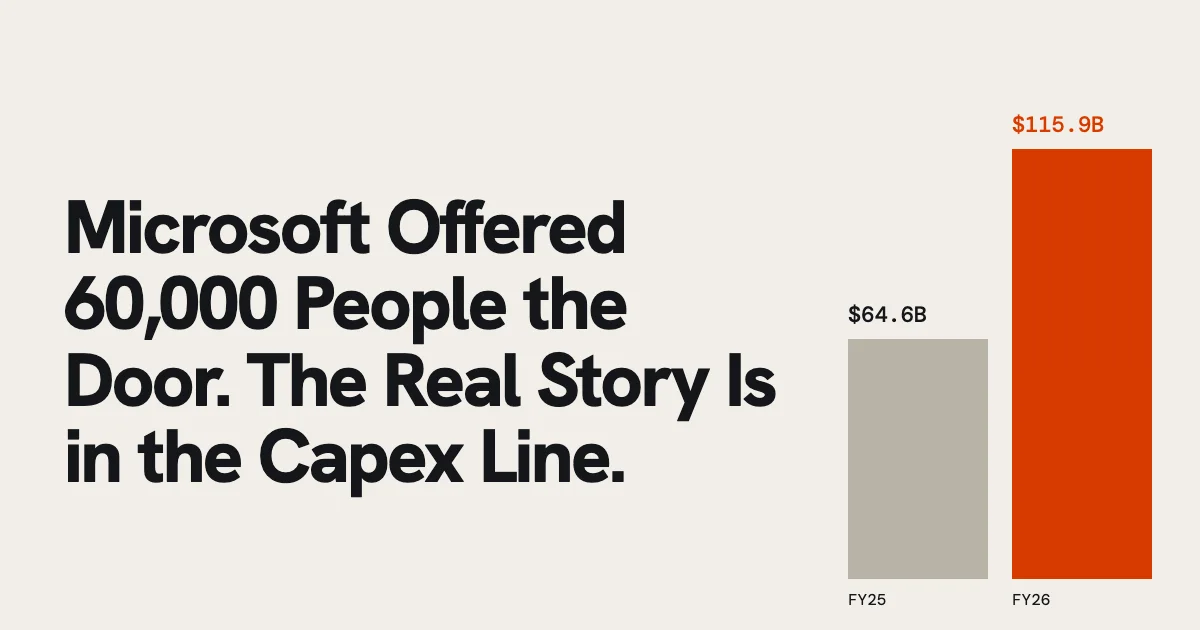
Microsoft Offered 60,000 People the Door. The Real Story Is in the Capex Line.
The headline reads as an AI layoff. Read the spending next to the revenue and a different reason shows up, one that will land at Google and Meta next.
AI & GPU compute
The AI CEOs Said Humans Were Replaceable. The Winning Hackathon Products Disagree
I want to tell you something that might change how you read every AI press release from this point forward.
Developer tools
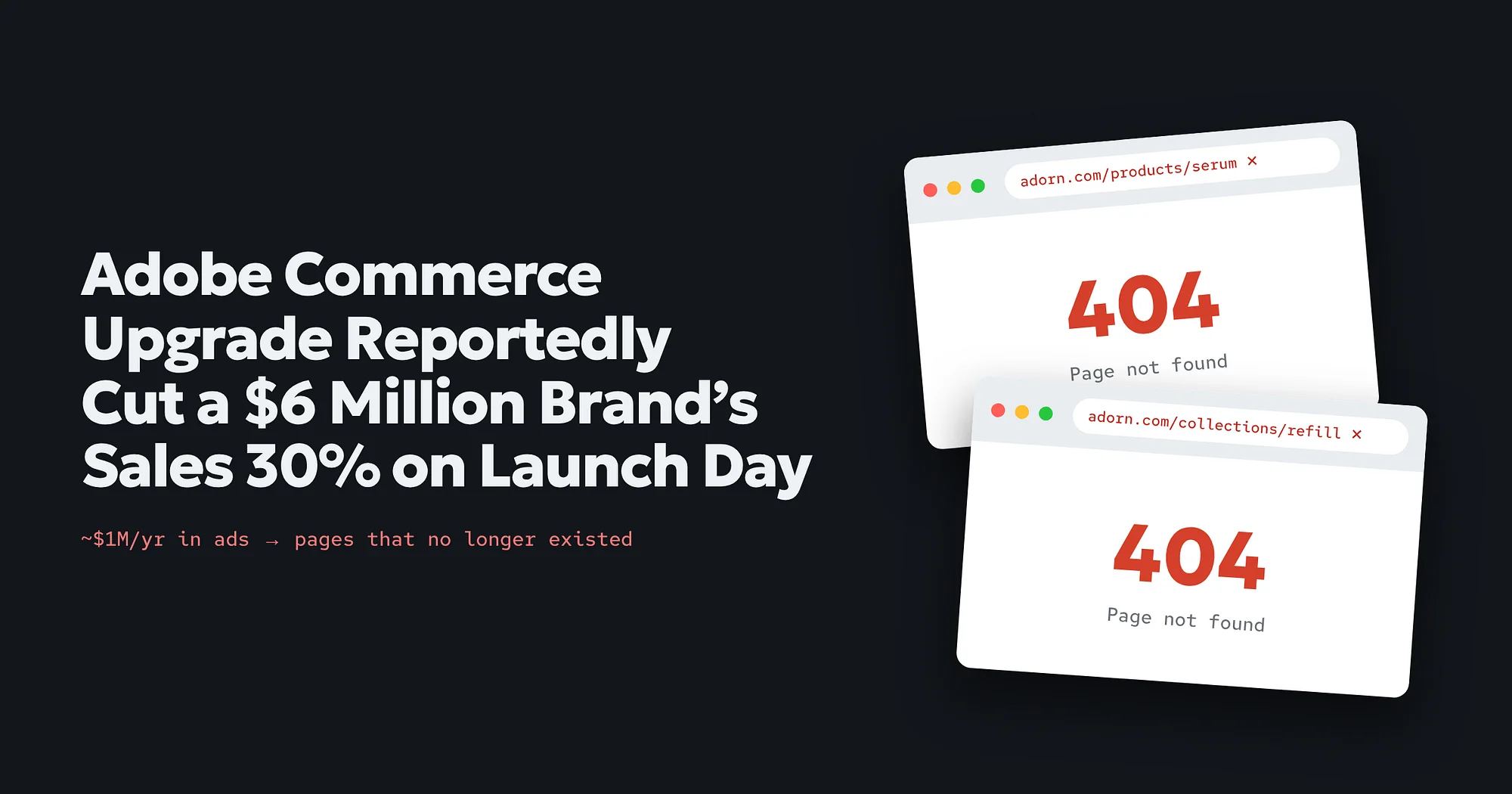
Adobe Commerce Upgrade Reportedly Cut a $6 Million Brand’s Sales 30% on Launch Day
Founder Briony Kennedy says a website migration cut sales by about 30% and broke roughly $1 million a year in ads. Adobe will not comment. The $150 million Adobe settlement in the headlines concerns consumer subscriptions and has no stated link to her contract.